How Foxes Adapt to Urban Environments Across Europe
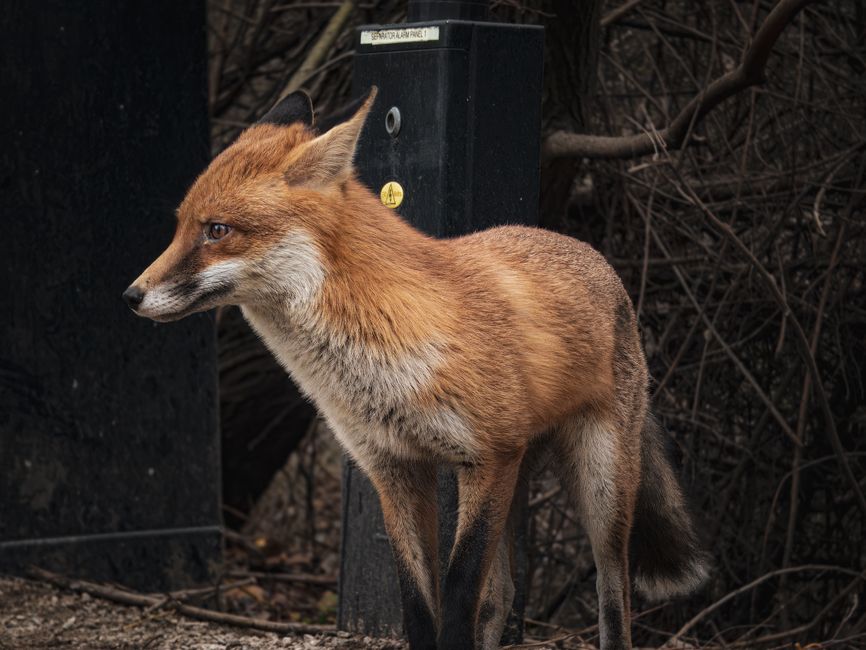
The presence of red foxes in European cities has become increasingly common over the past few decades. Once primarily associated with rural and woodland habitats, foxes now inhabit many metropolitan areas from London to Berlin and from Warsaw to Madrid. This shift is not simply a matter of stray individuals wandering into towns. Instead, it reflects a broader process of behavioral and ecological adjustment that allows a traditionally wary canid to thrive alongside millions of people. Understanding how foxes adapt to urban environments involves examining their diet, shelter choices, and interactions with human activity, as each of these elements reveals the strategies that support their presence in cities.
Urban environments present a set of conditions very different from those in rural areas. Food sources are more varied and often more predictable, but also require navigating human-dominated landscapes. Shelter opportunities are abundant yet fragmented, and the level of human disturbance fluctuates throughout the day. Foxes that succeed in cities are those that can modify their natural behaviors to exploit these new circumstances. This article explores the main behavioral changes observed in urban fox populations across Europe, focusing on dietary flexibility, denning habits, and the management of interactions with people. These adaptations are not uniform; they vary by city, by season, and by individual fox, highlighting the complexity of urban wildlife adaptation.
By examining these patterns, it becomes possible to appreciate the ecological processes that allow a wild carnivore to persist in settings that seem, at first glance, unsuitable. The following sections discuss specific aspects of urban fox biology, always keeping in mind that adaptation is an ongoing, context-dependent process rather than a fixed outcome.
Dietary Adaptations in Urban Environments
In natural habitats, red foxes typically rely on small mammals, birds, fruits, and invertebrates. Their diet shifts with seasonal availability, but the overall composition remains tied to the local ecosystem. In cities, the menu changes considerably. Anthropogenic food sources become a regular part of the diet, including household waste, pet food left outdoors, bird feeder spillage, and discarded fast food. Urban foxes also continue to hunt natural prey such as rats, pigeons, and earthworms, but the proportion of human-derived food can be significant, especially in densely built-up areas.
The ability to exploit these novel food resources is a key behavioral adaptation. Foxes learn to associate certain locations with food availability, such as bins that are consistently put out on collection days or gardens where residents feed cats. This learning process involves spatial memory and risk assessment. A fox must weigh the nutritional benefit against potential dangers, such as traffic, dogs, or human disturbance. Over time, individuals become more efficient at navigating these urban foraging opportunities. Researchers have observed that urban fox diets often show greater variation than those of rural foxes, reflecting the diversity of food items available in human settlements.
It is important to note that dietary adaptation does not mean urban foxes rely solely on human waste. Many continue to supplement their diet with natural prey, and the balance shifts depending on the season and the specific neighborhood. In suburban areas with gardens and parks, earthworms, beetles, and voles still constitute a substantial part of the diet. The flexibility of the fox’s feeding behavior is one of the primary reasons it can inhabit such a wide range of urban environments across Europe. No single diet composition guarantees success; instead, the process of learning and adjusting to local conditions is what supports the fox’s persistence.
Denning and Shelter Preferences
Foxes require secure locations for resting, raising young, and sheltering from weather. In rural areas, dens are often dug in earth banks, under tree roots, or in abandoned burrows of other animals. In cities, the range of available den sites changes. Foxes adapt by using spaces that offer cover and relative seclusion within the built environment. Common den locations include spaces under garden sheds, decking, and porches, as well as cavities in stone walls, railway embankments, and overgrown areas of parks. Disused drainage pipes and gaps beneath buildings are also frequently used.
The selection of a den site involves several considerations. Proximity to food sources is important, but so is safety. Foxes tend to choose sites that are difficult for humans or dogs to access, often in parts of gardens that are overgrown or less frequented. In more heavily urbanized areas, foxes may use multiple den sites within a small territory, moving between them based on disturbance levels. This behavior helps them avoid becoming too predictable. The construction of artificial dens by residents or wildlife organizations can also influence where foxes settle, though such interventions are not necessary for adaptation.
Urban denning habits also affect reproduction. The availability of secure, warm locations can contribute to successful breeding. Vixens often choose dens that are sheltered from noise and light, though some degree of habituation to urban sounds occurs. Litter sizes in cities are often similar to those in rural areas, but survival rates can vary based on the availability of food and the presence of threats such as cars or dogs. The process of denning in cities demonstrates how foxes use existing structures to fulfill their biological needs, modifying their natural instincts to fit the constraints of the urban landscape.
Interactions with Humans and Risk Management
Living in close proximity to humans requires foxes to constantly assess and manage risk. While some city foxes appear bold, most maintain a cautious distance from people. Their activity patterns shift to avoid peak human presence. In many European cities, urban foxes are primarily nocturnal or crepuscular, emerging in the evening and returning to their dens before dawn. This timing allows them to use spaces that are busy during the day with less interference. In areas with low human disturbance, such as large parks, some foxes may become more active during twilight or even daytime, depending on local conditions.
The degree of habituation varies among individuals and populations. Foxes that experience regular, non-threatening encounters with humans may become less fearful over time, a process that involves learning rather than innate boldness. However, this habituation is often site-specific; a fox that tolerates being seen in a garden may still flee if approached suddenly. Urban foxes also learn to read human behaviors, such as knowing that a person walking a dog may pose a different risk than someone simply passing by. These subtle behavioral adjustments are part of the ongoing interaction between foxes and their urban surroundings.
It is also important to consider the human side of these interactions. How people respond to foxes can shape the animals’ behavior. Feeding, either intentional or unintentional, encourages foxes to linger and return. Conversely, efforts to scare or exclude foxes can increase their wariness. In many European cities, coexistence is the norm, with foxes and residents sharing space with minimal conflict. The adaptability of foxes in this regard lies not in losing their natural caution, but in learning to calibrate their responses to the specific risks and rewards of each location. This process is continuous and changes with the urban environment itself.
Social Structure and Communication in Urban Settings
Foxes are generally solitary hunters but maintain social systems based on territories. In rural areas, home ranges can be several square kilometers. In cities, where food resources are concentrated and fragmented by roads and buildings, territories become much smaller. Urban foxes may occupy home ranges of less than one square kilometer, and sometimes as small as a few hectares. This compression of space leads to higher population densities and more frequent encounters between neighboring foxes. As a result, social dynamics shift. Scent marking, vocalizations, and body language become even more important for establishing boundaries and avoiding unnecessary conflict.
The urban environment also introduces new auditory challenges. Traffic noise and other human sounds can interfere with fox communication. Studies have suggested that urban foxes may adjust the timing or frequency of their calls to be more audible. For instance, the characteristic bark and scream may occur at quieter times of night. Scent marking becomes a primary method of communication, with foxes leaving urine and feces at prominent locations along travel routes. These markers convey information about identity, reproductive status, and territory ownership. In the urban setting, foxes must also contend with the scent of domestic dogs and other animals, which adds complexity to the chemical landscape.
Group structure in urban foxes is often based on a breeding pair and their offspring from the previous year, who may stay longer to help rear new cubs before dispersing. This cooperative behavior is not unique to cities, but it is facilitated by the reliable food supply and limited dispersal opportunities. The process of learning within the family group helps younger foxes acquire the skills needed to navigate the urban environment efficiently. Over time, these behavioral patterns become reinforced, contributing to the persistence of urban fox populations across Europe.
Key Factors in Urban Fox Adaptation
The successful adaptation of foxes to European cities is not the result of a single trait but rather a combination of flexible behaviors. Dietary opportunism allows them to exploit a wide range of food sources, from human refuse to natural prey. The ability to use diverse structures for denning provides the security needed for rest and reproduction. Careful risk management through temporal and spatial avoidance of humans reduces conflict. Finally, modifications in social and communication strategies help maintain stable populations in a crowded environment. All these adjustments occur gradually and are influenced by local conditions, meaning that the process of adaptation continues as cities change.
Understanding these patterns is valuable for anyone interested in urban ecology or wildlife management. It provides a framework for observing how a species responds to the pressures and opportunities of human-dominated landscapes. Rather than viewing urban foxes as a problem or a curiosity, they can be seen as a case study in behavioral flexibility. The process-oriented perspective used here emphasizes that there is no single blueprint for urban fox life. Each population, and indeed each fox, follows a unique path shaped by the specific environment it inhabits. That is the essence of adaptation: a continuous, context-dependent adjustment that allows life to persist in unexpected places.